
Beyond the Patrol Checklist: Training Security Officers to Recognize Physical Security Vulnerabilities
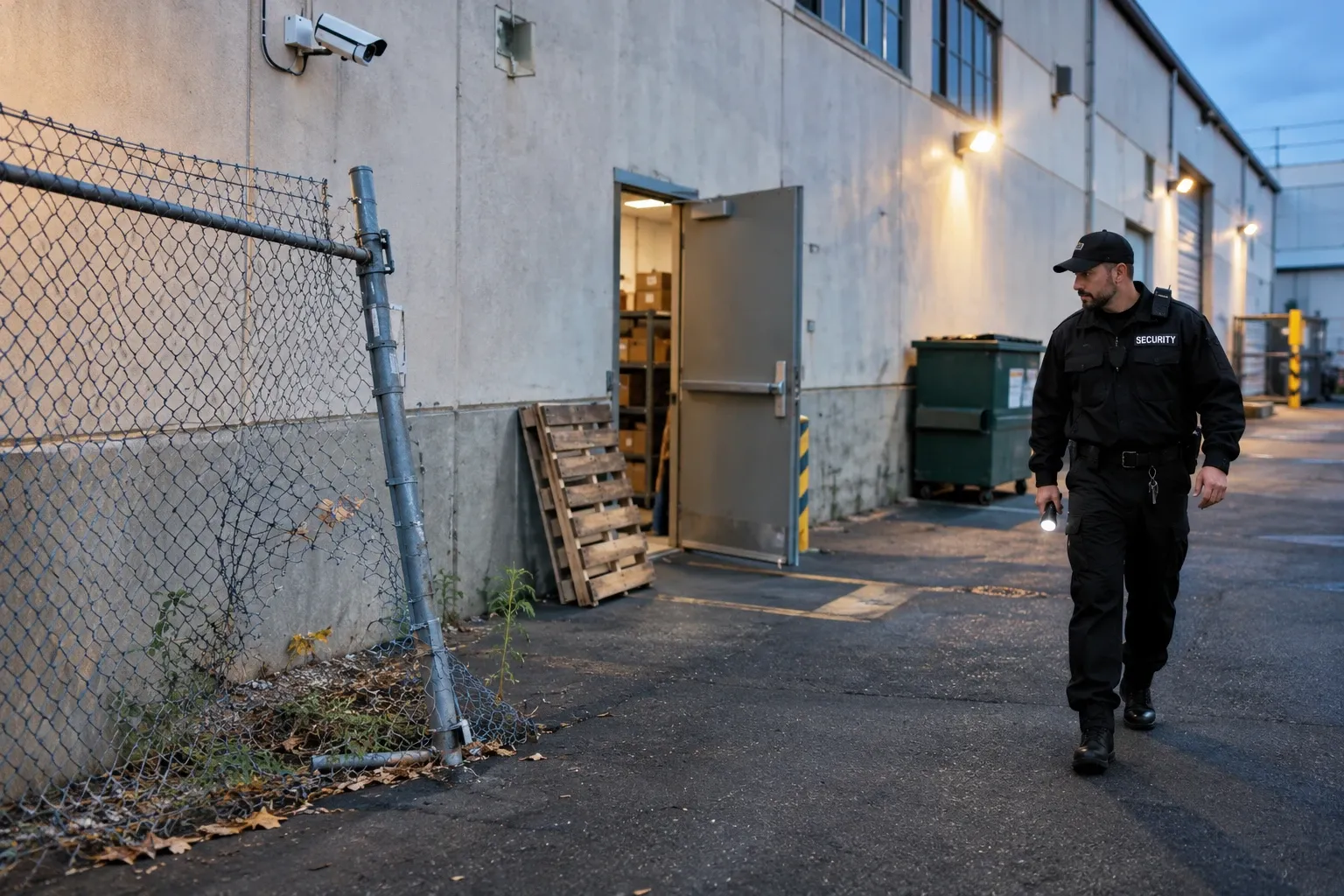
Why frontline security personnel should play a greater role in identifying and reporting vulnerabilities before they become security incidents.
Organizations invest significant resources in physical security systems, protective measures, and personnel. Access-control systems, surveillance cameras, perimeter barriers, and security procedures are designed to protect people, facilities, and assets.
Yet even organizations with established security programs can overlook vulnerabilities that develop during everyday operations.
An exterior door that no longer latches properly. A surveillance camera with an obstructed view. An access-control procedure that employees routinely bypass. A damaged perimeter gate that remains unrepaired.
These conditions may persist for days, weeks, or longer without attracting meaningful attention.
What makes this particularly concerning is that security personnel may encounter these vulnerabilities during every shift.
The issue is not always a lack of security resources. Sometimes it is a lack of training that helps frontline officers recognize what they are seeing and understand why it matters.
This presents an opportunity for organizations and security providers to strengthen their protective operations by developing more capable, observant security personnel.
Security Patrols Should Be More Than a Completed Task
Security patrols are among the most common responsibilities assigned to frontline officers.
Depending on the facility, officers may be expected to inspect entrances, check doors, observe perimeter conditions, verify equipment status, and identify unusual activity.
Many organizations use electronic patrol systems or checklists to document these activities.
These tools provide accountability and help supervisors verify that required duties have been completed.
However, there is an important distinction between completing a patrol and conducting a meaningful security inspection.
An officer may walk an assigned route, scan every checkpoint, and submit a completed patrol report without recognizing a vulnerability encountered along the way.
From a compliance perspective, the assignment may appear complete.
From a security perspective, an opportunity to identify a weakness has been missed.
A patrol confirms where an officer has been. An informed security observation helps determine whether the protective measures in that area are functioning as intended.
The difference is knowledge, training, and an understanding of the officer's role in vulnerability identification.
Familiarity Can Create Blind Spots
One challenge in security operations is that personnel become accustomed to their surroundings.
An officer assigned to the same facility every day develops familiarity with the building, employees, routines, and security procedures.
This familiarity can improve operational effectiveness. Officers may recognize unusual activity more quickly because they understand what normal operations look like.
However, familiarity can also create complacency.
Consider a loading dock where employees routinely prop open an access-controlled door during deliveries.
Initially, the practice may attract attention. Over time, if supervisors and employees tolerate the behavior, it may become an accepted part of daily operations.
The officer no longer views the open door as a vulnerability because it has become normal.
The same problem can occur with malfunctioning cameras, damaged fencing, inadequate lighting, or inconsistent visitor screening procedures.
Security personnel should be trained to distinguish between established routines and acceptable security practices.
A condition does not become secure simply because it has existed for an extended period without a known incident.
Recognizing Common Physical Security Vulnerabilities
Professional physical security assessments involve structured evaluations of protective systems, operational procedures, facility conditions, and relevant threats.
These assessments require appropriate knowledge, experience, and methodology.
Frontline officers are not expected to perform comprehensive professional assessments unless they possess the necessary qualifications and are specifically assigned that responsibility.
However, they can be trained to recognize common vulnerabilities encountered during normal security operations.
Access Control
Officers should understand the importance of properly functioning doors, locks, credential systems, and visitor management procedures.
Examples of observable concerns include unsecured entrances, malfunctioning door hardware, unauthorized access attempts, credential sharing, and recurring failures to follow access-control procedures.
A security officer who identifies repeated instances of unauthorized entry or procedural circumvention provides information that may help management address a broader weakness.
Perimeter Security
Perimeter protection may include fencing, gates, barriers, lighting, surveillance coverage, and controlled access points.
Officers conducting routine patrols can identify damaged barriers, unsecured gates, obstructed sightlines, and changes in surrounding conditions.
These observations may help security management determine whether protective measures require maintenance, modification, or further evaluation.
Lighting and Surveillance
Lighting and surveillance systems support observation, deterrence, incident response, and investigations.
However, the presence of equipment does not guarantee its effectiveness.
Officers should recognize malfunctioning lights, obstructed camera views, damaged equipment, and apparent gaps in monitoring capabilities.
These conditions should be documented and referred to the appropriate personnel rather than accepted as routine maintenance issues with no security significance.
Security Procedures
Physical security vulnerabilities are not limited to equipment and infrastructure.
They also arise from human behavior and inconsistent procedures.
Examples include improper key control, unauthorized access practices, inadequate visitor verification, and employees routinely bypassing established protective measures.
Security officers should understand that recurring procedural violations may represent vulnerabilities even when no immediate incident has occurred.
Recognizing these patterns is an important component of effective frontline security operations.
The Difference Between Identifying and Assessing Vulnerabilities
An important principle in security officer training is establishing the distinction between identifying a vulnerability and conducting a professional security assessment.
A security officer may recognize that an access-controlled door is malfunctioning.
The officer can document the condition, notify the appropriate personnel, and take authorized protective action when necessary.
However, determining the overall risk associated with that vulnerability may require additional analysis.
A professional assessment may consider the facility's threat environment, the importance of the protected area, existing compensating controls, operational requirements, and the potential consequences of unauthorized access.
These considerations extend beyond simply observing that a door does not function properly.
Frontline personnel contribute by identifying and reporting observable conditions. Qualified security professionals and organizational decision-makers evaluate the broader implications and determine appropriate corrective measures.
This distinction allows organizations to benefit from frontline observations without assigning responsibilities beyond an officer's training or authority.
Reporting Must Support Corrective Action
Identifying a vulnerability provides limited value if the information is not communicated effectively.
Security officers should understand how to document findings in a manner that supports review and corrective action.
Consider two examples.
Report A: "Rear entrance is unsecured."
Report B: "At approximately 1430 hours, the rear employee entrance on the east side of Building B failed to latch after closing. The door could be opened without presenting an access credential. The condition was reported to the site supervisor at 1438 hours."
The second report identifies the location, observed condition, time, and notification made.
It provides sufficient detail for security management or facilities personnel to verify the concern and determine an appropriate response.
Training should emphasize factual descriptions, accurate locations, relevant circumstances, and timely reporting.
Officers should also understand the difference between routine maintenance notifications and conditions requiring immediate security attention.
For example, a malfunctioning exterior light may follow an established maintenance reporting process. An unsecured entrance to a sensitive facility may require immediate notification and authorized interim protective measures.
These decisions should be guided by organizational policy, site procedures, and the circumstances encountered.
Professional Assessments and Frontline Observations Should Complement Each Other
Comprehensive physical security assessments provide organizations with structured evaluations of vulnerabilities and protective capabilities.
They help identify weaknesses, evaluate risk, and develop recommendations for improvement.
However, a physical security assessment represents an evaluation of conditions during a particular period.
Facilities and operations continue to change.
Equipment deteriorates. Employees develop new routines. Contractors modify building spaces. Operational requirements change. Security procedures may become less effective over time.
These changes can introduce vulnerabilities after an assessment has been completed.
Frontline security personnel can help identify developing conditions between formal assessments.
Their observations may also provide valuable information during subsequent professional evaluations.
For example, a security consultant conducting a facility assessment may observe that an access-control system appears to function properly.
However, several months of officer reports documenting recurring door malfunctions or unauthorized access attempts may reveal a broader operational concern.
This information provides context that may not be apparent during a single site visit.
Professional assessments identify and evaluate security vulnerabilities. Trained frontline officers can help organizations recognize when conditions change and new weaknesses emerge.
These functions should reinforce one another.
Security Leadership Must Establish the Standard
Developing a more observant security workforce requires leadership involvement.
Security company owners, operations managers, site supervisors, and training personnel should establish clear expectations for vulnerability recognition and reporting.
Officers should understand what conditions to look for, how to document their findings, when immediate notification is necessary, and which personnel are responsible for evaluating corrective actions.
Supervisors should reinforce these expectations through practical exercises, report reviews, and routine operational discussions.
Organizations should also establish processes for reviewing reported vulnerabilities and tracking corrective action.
Without appropriate follow-up, even accurate observations may have little impact on overall security effectiveness.
For contracted security providers, this requires coordination with the client.
Security personnel may identify vulnerabilities, but decisions regarding facility modifications, equipment repairs, operational changes, and acceptance of residual risk generally belong to designated organizational representatives.
Clear communication and defined responsibilities help ensure that observations contribute to meaningful improvements.
Developing a More Proactive Security Workforce
The security industry often evaluates frontline performance through measurable activities such as patrol completion, access-control enforcement, incident response, and report submission.
These responsibilities are important, but they do not fully capture the potential value of a well-trained security officer.
An officer who identifies an unsecured access point before it is exploited contributes to prevention.
An officer who recognizes recurring procedural weaknesses provides management with information that may support operational improvements.
An officer who documents changes in facility conditions helps maintain awareness of developing vulnerabilities.
These contributions reflect a proactive approach to security operations.
They also demonstrate why professional development should extend beyond minimum licensing requirements and basic post-specific instruction.
Security officers become more valuable when they understand not only what they are expected to do, but also the security principles underlying those responsibilities.
Moving Beyond the Checklist
Physical security assessments remain an important function of professional security consulting and organizational risk management.
However, vulnerability identification should not be limited to periodic assessments.
Organizations can strengthen their security posture by teaching frontline personnel to recognize and communicate observable weaknesses during everyday operations.
This does not mean assigning comprehensive assessment responsibilities to unqualified personnel.
It means providing officers with the knowledge and practical skills necessary to make their existing duties more effective.
A patrol checklist can confirm that an officer inspected a location.
Training can help that officer understand what to look for, why it matters, and how to communicate a concern.
The objective is not to make every security officer a professional security assessor. It is to develop security personnel who recognize vulnerabilities before those weaknesses contribute to an incident.
That is how routine security operations can become a more meaningful component of organizational risk reduction.
Strengthening Frontline Vulnerability Awareness
GDB Protective Services develops practical training that helps security personnel recognize and communicate physical security vulnerabilities.
Through Protective Services Training Center (PSTC), the Identifying and Assessing Security Vulnerabilities in the Workplace Train-the-Trainer course prepares security supervisors, operations managers, and designated trainers to teach frontline officers how to identify common vulnerabilities, document findings, and communicate concerns through appropriate channels.
The course includes practical site-observation exercises and foundational vulnerability identification principles. It is designed to strengthen frontline awareness without replacing comprehensive professional security assessments.
Learn more at protectiveservices-tc.com.
Sources and further reading
Learn more about GDB's physical security assessments.