Workplace Physical Security: Protecting People, Assets, and Reputation
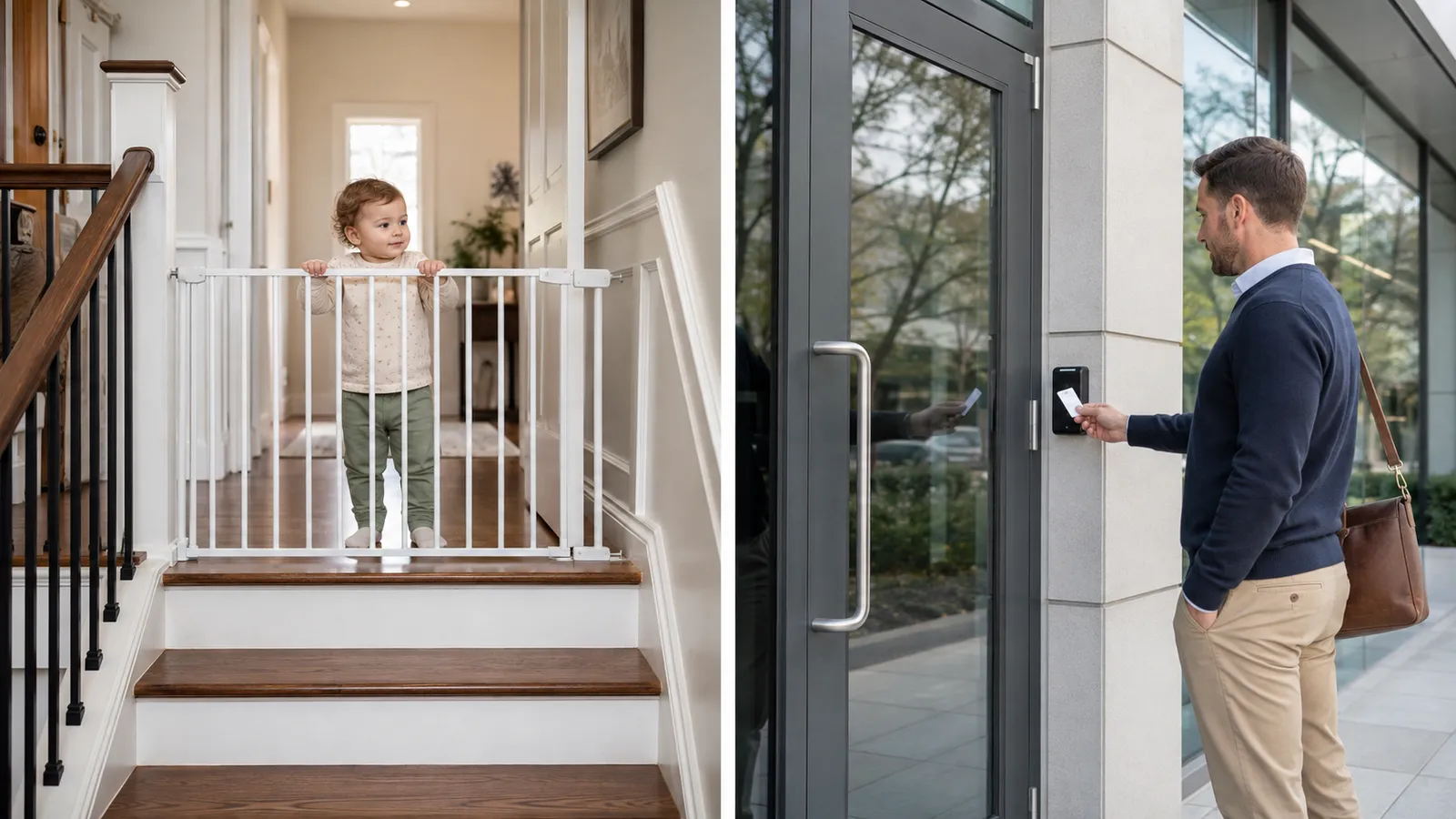
Why should an organization implement workplace physical security measures? For many of the same reasons people baby-proof their homes: to reduce foreseeable opportunities for harm before someone is injured, property is damaged, or trust is lost.
Anyone who has lived with or hosted a toddler understands the logic. Young children are curious. They open cabinets, pull cords, climb furniture, wander toward stairs, and reach for objects without understanding the consequences. Responsible adults do not wait for an injury and then decide whether a gate, latch, or outlet cover might have helped. They make the environment safer in advance.
The comparison is not meant to suggest that employees, customers, vendors, or visitors are children. The shared principle is environmental design: people move through spaces, mistakes happen, access can be misused, and predictable vulnerabilities should be addressed before they become incidents.
Good physical security shapes opportunity before behavior becomes an incident.
Baby-proofing protects three things: people, property, and the homeowner’s reputation for providing a reasonably safe environment. Workplace physical security serves the same three outcomes. It protects people, protects assets and operations, and protects the organization’s brand, culture, and credibility.
What Is Workplace Physical Security?
Workplace physical security is the coordinated use of people, procedures, information, facility design, and technology to control access, discourage harmful behavior, identify problems, and support an effective response. It is not one product and it is not synonymous with hiring a security officer.
Common physical security measures include:
- Access control for exterior doors and sensitive interior areas.
- Reception, visitor registration, badging, and escort procedures.
- Locks, lighting, alarms, cameras, barriers, and clear sightlines.
- Defined public, employee-only, and restricted spaces.
- Processes for reporting concerning behavior, hazards, or suspicious activity.
- Emergency communications, response procedures, and practiced roles.
- Trained security personnel when the assessed risk and operating environment justify them.
The strength of the program comes from how those measures work together. A badge reader is useful only if credentials are assigned appropriately, lost cards are reported, former employees are promptly removed, doors are not routinely propped open, and someone responds when the system identifies a problem.
1. Physical Security Protects People
The first purpose of workplace security is to protect the people who enter the organization’s care: employees, customers, patients, students, vendors, guests, and members of the public.
That protection does not begin with an armed response or a confrontation. It begins by reducing opportunities for an avoidable problem. Clear entrances, working locks, adequate lighting, visitor procedures, reporting channels, and trained personnel create boundaries while there is still time to make calm decisions.
These measures can help prevent an unauthorized person from wandering into a private office, a former employee from regaining routine access, a visitor from entering a hazardous workspace, or an escalating concern from remaining invisible until it becomes urgent.
Good security also reduces uncertainty. Employees should know which entrances to use, how visitors are admitted, who has authority to approve exceptions, whom to contact when something feels wrong, and what will happen after a concern is reported. Predictability is a safety benefit.
2. Access Control Protects Assets and Operations
Organizations possess more than equipment and inventory. Their assets include facilities, vehicles, technology, intellectual property, confidential records, credentials, operational systems, and employee or customer information.
Access control is one of the clearest examples of practical protection. Most people would not leave every exterior door of their home unlocked simply because they trust the family members who live there. A lock is not an accusation. It is a boundary between authorized and unauthorized access.
The same principle applies at work. An employee may need access to one building, floor, department, or system but not another. A vendor may need the loading area without entering administrative offices. A visitor may be welcome in a conference room while still requiring an escort elsewhere.
Trust answers who belongs to the organization. Access control answers who needs to be in this specific place, at this specific time, for this specific purpose.
Well-designed boundaries reduce theft, damage, disruption, privacy violations, accidental entry, and opportunities to misuse access. They also improve accountability after a concern arises. The alternative is often not a more welcoming environment; it is an environment that relies on hope as its access-control strategy.
3. Security Protects Brand, Reputation, and Culture
When parents bring a child into someone else’s home, they notice whether obvious hazards have been considered. A reasonably safe environment communicates care, preparation, and respect. Employees, clients, partners, and visitors form similar impressions of a workplace.
They notice doors propped open, strangers moving without direction, broken locks, dark parking areas, inconsistent visitor practices, ignored concerns, and confusion about who is responsible when something happens. Those conditions communicate organizational values just as clearly as a written safety statement.
Thoughtful security supports culture because it establishes predictable boundaries without requiring people to operate in fear. It can improve employee confidence, client trust, recruitment, retention, business continuity, and leadership credibility. After a preventable incident, the question is rarely limited to what the offender did. People also ask what the organization knew, what it could reasonably have anticipated, and what it did to reduce the risk.
Why Do Organizations Resist Security Measures They Accept at Home?
At home, ordinary preventive measures rarely feel controversial. We lock exterior doors, close garages, install smoke detectors, secure medications, use exterior lighting, and control who receives a key. At work, similar measures may be described as inconvenient, unwelcoming, or evidence that leadership distrusts employees.
Those concerns should be taken seriously because badly designed security can create friction. But the answer is not to avoid reasonable safeguards. It is to explain their purpose, make them proportionate to the risk, and integrate them into normal operations with as little unnecessary burden as possible.
A welcoming workplace and a controlled workplace are not opposites. A professional reception process can be both courteous and deliberate. An access-control system can be convenient for employees while preventing uncontrolled entry. A security officer can provide customer service, information, and reassurance while maintaining awareness and authority.
Physical Security Is a System, Not a Product
People outside the profession often think of security as something visible: a camera, card reader, guard, gate, or alarm. Practitioners should recognize the larger system behind those objects.
Every control depends on decisions and behavior. Who receives access? Who reviews exceptions? What happens when a badge is shared? Who investigates a door forced open? How quickly is access removed when employment ends? Who receives an alarm, and what are they expected to do?
A sophisticated system can be defeated by a propped door, a borrowed credential, an unchallenged visitor, or an unclear response plan. Conversely, a modest workplace can meaningfully improve security through consistent procedures, clear ownership, good lighting, key control, employee awareness, and prompt maintenance.
Security does not fail only when technology breaks. It also fails when ownership, expectations, and follow-through are unclear.
Prevention Is Usually Quiet
The most effective security measures often attract little attention. A locked side door prevents an unauthorized shortcut. A receptionist notices that a visitor lacks an appointment. An employee reports concerning behavior early. A badge is disabled when an authorized relationship ends. A trained officer’s presence changes someone’s decision before confrontation becomes necessary.
Nothing dramatic happens—and that is the point. Prevention can be undervalued precisely because its success is an uneventful day. The absence of an incident is not proof that a control was unnecessary; it may be evidence that opportunity was reduced, uncertainty was resolved, or a problem was interrupted early.
A baby gate is not considered useless because the child did not fall down the stairs. Its purpose was to make the fall less likely. Workplace physical security should be evaluated with the same logic, while still being reviewed and adjusted as the environment changes.
How to Assess Physical Security in the Workplace
Every organization does not need the same controls. A small professional office, manufacturing site, medical clinic, school, warehouse, and corporate headquarters have different people, workflows, hazards, assets, and exposure. The starting point should be the workplace that actually exists—not a generic list of equipment.
A practical physical security assessment should ask:
- Who should be able to enter each area, and how is that authority granted and removed?
- Where do employees, visitors, vendors, deliveries, and former personnel arrive?
- Which people, information, equipment, and operations require greater protection?
- Where could someone enter, move, or remain without being noticed?
- Which doors, parking areas, corridors, reception points, and workspaces create avoidable vulnerability?
- What incidents, near misses, threats, or concerning behaviors have occurred before?
- How are concerns reported, assessed, escalated, documented, and resolved?
- How will the organization communicate and respond during foreseeable emergencies?
The answers should produce prioritized, proportionate improvements. Sometimes the most valuable first steps are clearer procedures, repaired hardware, improved lighting, better key control, consistent visitor management, employee training, or enforcement of an existing rule. An assessment should identify what reduces risk—not justify a predetermined purchase.
Security controls must also preserve life safety. For example, workplace access control should be designed so it does not improperly obstruct emergency egress. Prevention works only when the entire operating environment is considered.
Frequently Asked Questions About Workplace Physical Security
What are examples of physical security measures in the workplace?
Examples include locks, credentialed access, visitor management, reception procedures, lighting, alarms, cameras, barriers, key control, defined restricted areas, employee reporting processes, emergency communications, response plans, and trained security personnel where justified. The appropriate combination depends on the organization’s risks and operations.
Does workplace access control mean an employer does not trust employees?
No. Access control establishes role-based boundaries and reduces accidental as well as intentional misuse. It should be administered consistently, explained clearly, and designed around legitimate business needs. Trust and appropriate access are related, but they are not the same decision.
Does every workplace need a security officer?
No. Security personnel are one possible layer, not the definition of a security program. The decision should follow a risk assessment that considers the people, site, operating hours, incidents, threats, public exposure, and ability of other controls to prevent, detect, delay, and support response.
Security Is Common-Sense Care
Baby-proofing does not eliminate every possibility of injury. Adults still supervise, teach, respond, and adapt as a child grows. The physical safeguards support those responsibilities; they do not replace them. Workplace security functions the same way.
Locks, credentials, cameras, procedures, training, reporting systems, and security personnel cannot eliminate every threat. Together, they can reduce opportunity, improve awareness, establish boundaries, create time, and support a more effective response.
The better question is not whether implementing security makes an organization fearful or distrustful. It is whether leadership has taken reasonable, proportionate steps to protect the people, assets, operations, and reputation entrusted to it.
At home, making the environment safer for a curious child is understood as responsible care. At work, thoughtfully designed physical security deserves the same common-sense understanding.
Sources and further reading
- CISA — Physical Security
- OSHA — Emergency Preparedness and Response
- OSHA — Exit Routes (29 CFR 1910.36)
- NIST — SP 800-53 Physical and Environmental Protection Controls
Learn more about GDB's physical security assessments.